


Istanbul’s bazaars are arranged so that the purchase almost always comes last. First the conversation, then the tea, then the price — and only then the object. Accept that order and haggling stops being a task and becomes a pastime.
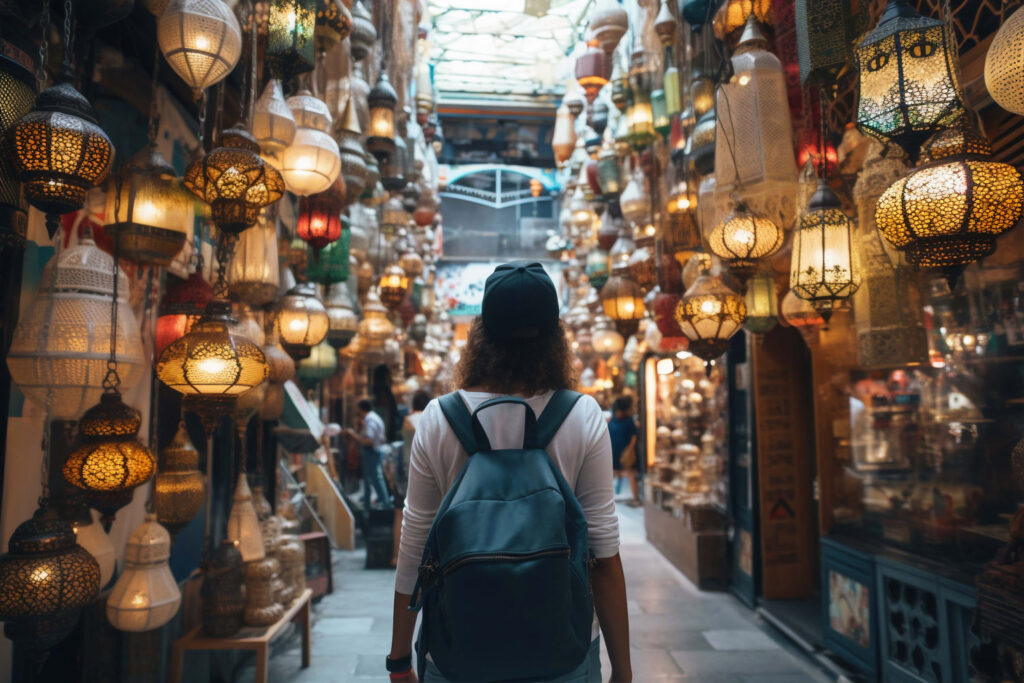
The Grand Bazaar
The Grand Bazaar has been trading since the fifteenth century: sixty streets under one roof and more than four thousand shops. Carpets, gold, leather and ceramics are grouped by quarter, and everyone gets lost at least once.
On bargaining: the opening price is always high, a counter-offer usually starts near half, and the deal lands somewhere in between. Walking away and coming back later is a normal move, not an insult.
The Spice Bazaar
At the Spice Bazaar in Eminönü the trade is spices, nuts, dried fruit and tea. It is compact enough to walk in an hour.
Buy what will survive the journey home: baklava in a tin, saffron, tea blends, vacuum-packed Turkish delight. From the hotel it is a ten-minute walk.
Arasta Bazaar
Arasta, behind the Blue Mosque, is a single short street of ceramics and carpets. The range overlaps heavily with the Grand Bazaar, but browsing is calmer and nobody takes hold of your sleeve.
Neighbourhood markets
Once a week every district sets out a street market: vegetables, cheese, textiles, kitchenware, at local rather than tourist prices. Tuesday in Kadıköy and Wednesday in Fatih are the largest.
If bazaars aren’t for you
Nişantaşı is the district of brands and designer windows. Çukurcuma is antiques and vintage, shop after shop. İstinye Park gathers all of it under one roof, with air conditioning and fixed prices.
But there is no hurry here
A good bazaar purchase rarely happens in the first fifteen minutes. Accept the tea, look in three places, go back to the second — and both the price and the object turn out right.
Our hotel is in Sirkeci, within walking distance of all three bazaars. See what else is nearby on our Explore page.