


Traditional Turkish coffee and tea service in the Historic Peninsula relies on precise grind sizes, copper cezve or double-pot brewing techniques, and palate-cleansing water rituals. Serving guests beverage pairings accompanied by Turkish delight builds a hospitality ritual refined over five centuries of Ottoman cafe culture.
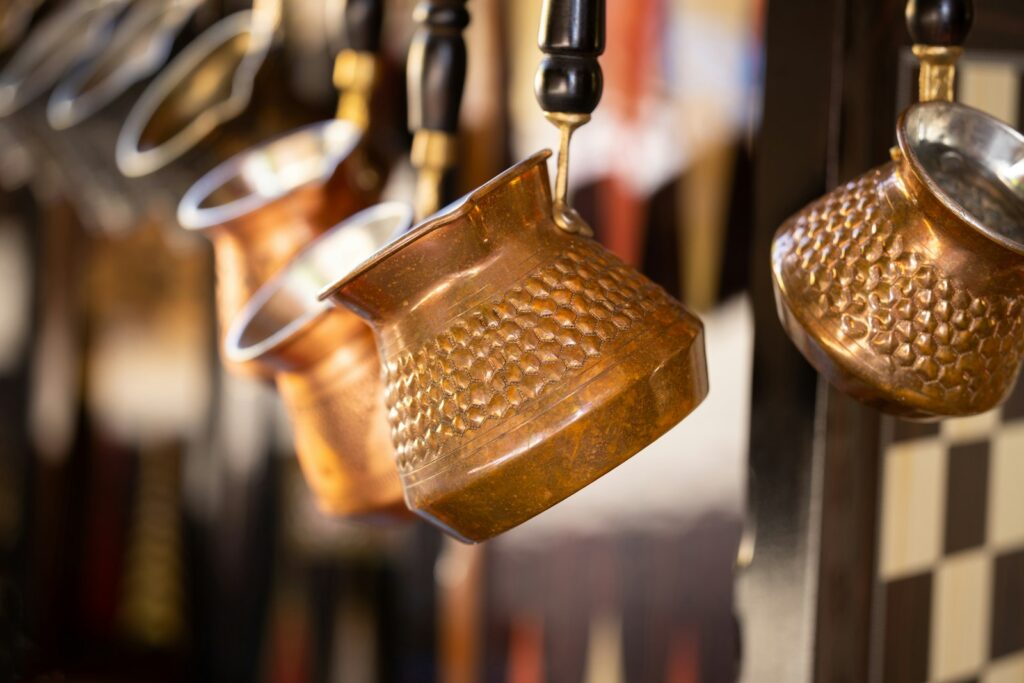
Preparation methods for sand-brewed Turkish coffee
Sand-brewed Turkish coffee uses a pan filled with fine brass sand heated to temperatures exceeding 160°C, allowing the copper pot to sink into hot grains for uniform thermal conduction. This method prevents scorching the extra-fine Arabica coffee beans and creates a thick foam essential to proper preparation. When you watch a barista navigate the hot sand bed, you observe a technique designed to bring water and ground coffee to a boil gradually without burning the delicate oils.
The process begins by mixing 7 grams of powder-fine coffee with 60 milliliters of cold water inside a long-handled copper pot known as a cezve. Sugar is added during the initial stirring phase based on your personal preference: sade for unsweetened, az şekerli for slightly sweet with half a spoon, orta for medium sweetness with one spoon, or şekerli for extra sweet with two spoons. Because sugar cannot be added after brewing without destroying the foam layer, your order must specify the exact sweetness before heating begins.
Once the cezve rests in the heated sand for approximately 2 to 3 minutes, the liquid heats from all sides simultaneously. As dark foam rises toward the rim, the barista carefully lifts the pot to divide the rich foam evenly among small porcelain cups called fincan. The pot returns to the sand bed for a second brief rise to ensure the liquid reaches optimal temperature. Leaving the ground coffee sediment resting undisturbed at the bottom of your cup allows the beverage to settle while retaining its distinct velvet texture.
Morning tea traditions near Gulhane Park grounds
Morning tea traditions near Gülhane Park involve brewing full-bodied black tea leaves from the Rize province using a double-tiered teapot system called a çaydanlık, served scalding hot in clear tulip-shaped glass cups. The lower kettle boils plain water while the upper pot steams concentrated tea leaves, allowing each person to customize their preferred beverage strength from light to dark. This two-step boiling mechanism keeps the tea hot for hours without boiling the leaves directly into bitter tannins.
To experience morning tea culture like a local resident, walk down Hüdavendigar Street past the historic stone walls of Gülhane Park toward the open-air tea gardens overlooking the Bosporus. Etiquette requires holding the clear glass, known as an ince belli, by its narrow waist or gold rim to protect your fingertips from heat while observing the bright mahogany color. Locals refer to this rich crimson shade as tavşan kanı, comparing it to deep ruby tones that signal proper extraction.
Tea service forms an essential accompaniment to traditional breakfast spreads featuring simit sesame bread rings, white cheeses, cured olives, and local preserves. If you wish to start your day with a full culinary spread before walking to Sultanahmet Square or Topkapı Palace, enjoy our comprehensive breakfast buffet which pairs freshly brewed black tea with regional cheeses, warm pastries, and seasonal fruits.
Selecting regional Turkish delights and sweet pairings
Selecting the right sweet pairing for traditional Turkish coffee requires balancing the beverage’s roasted bitterness with high-density confections like double-roasted pistachio Turkish delight or mastic-infused sweets. The sweet treat is always consumed before or between sips of coffee to contrast the rich, unfiltered brew. In Ottoman palace culinary tradition, sweet treats were selected not merely as desserts, but as aromatic counterweights to dark-roasted coffee beans imported via historic trade routes.
A critical rule of coffee etiquette involves drinking a small sip from the glass of cold water served alongside your cup before taking your first coffee sip. Drinking water cleanses your palate of former food flavors, allowing you to taste the full complexity of the coffee beans. If you drink the water after finishing your coffee, local hosts may interpret it as a subtle sign that the coffee was too harsh or improperly prepared.
When purchasing Turkish delight near the Spice Bazaar, located roughly ten minutes downhill from Sirkeci, look for artisanal producers using natural cornstarch and cane sugar cooked slowly in copper kettles. Premium varieties feature whole double-roasted pistachios, pomegranate juices, or clotted kaymak cream. For guests interested in expanding their culinary palate into evening tasting rituals, you can reserve our specialized wine and cheese experience to explore regional Anatolian vintages alongside artisan Turkish cheeses.
Tasting traditional brews at Sirkeci area cafes
Tasting traditional brews at Sirkeci area cafes offers immediate access to historic coffee houses situated along Hüdavendigar Street and near Sirkeci Railway Station, located within a 2 to 5-minute walk from historic peninsula accommodations. These neighbourhood cafes maintain beverage customs passed down through centuries, serving guests at low wooden tables beside cobblestone pathways.
When ordering coffee in Sirkeci, keep in mind that traditional Turkish coffee is served unfiltered. Once the fincan reaches your table, allow it to sit undisturbed for at least one minute so the fine coffee sediment settles completely at the bottom of the cup. Sip slowly from the top layer and stop drinking as soon as you reach the thick grounds resting at the base. Stirring your cup with a spoon after service is considered a culinary error because it mixes the dense sediment back into liquid.
As noted by the Romance Istanbul Hotel team, taking time for an unhurried beverage ritual allows travelers to connect with local culture away from long museum queues. After enjoying afternoon coffee or tea in the neighborhood, walk to nearby dining establishments like Olive Anatolian Restaurant, located on a nearby rooftop in Sirkeci, where traditional Anatolian recipes and dedicated vegan options are served alongside views of the Historic Peninsula. If you wish to explore Ottoman royal heritage and harem history further during your stay, you can also consider visiting our sister property, Hotel Sultania, which focuses on palace narratives.
| Beverage Ritual | Preparation Method | Serving Vessel | Key Etiquette Rule |
|---|---|---|---|
| Sand-Brewed Coffee | Slowly heated in copper cezve buried in hot brass sand | Small porcelain cup (fincan) | Never stir after serving; sip water first to cleanse palate |
| Turkish Black Tea | Steamed in double-tiered metal kettle (çaydanlık) | Tulip-shaped clear glass (ince belli) | Hold cup by the rim or waist; adjust strength with hot water |
| Dibek Coffee | Pounded with stone pestle in wooden mortar before brewing | Traditional brass-jacketed ceramic cup | Expect a thicker, rounder mouthfeel with lower acidity |
| Menengiç Coffee | Brewed from roasted wild terebinth berries and milk | Wide ceramic coffee cup | Caffeinated alternative with nutty undertones; sweeten to taste |
Mastering Turkish coffee and tea etiquette turns a simple break into a rich cultural connection across the Historic Peninsula. By respecting sugar ordering rules, palate-cleansing water customs, and slow-brewing methods, you experience authentic Ottoman hospitality right in the heart of Istanbul.
Frequently Asked Questions
What is the correct way to drink Turkish coffee?
First, drink a small sip of cold water to cleanse your palate. Next, sip the coffee slowly from the surface foam without stirring, as stirring disturbs the sediment resting at the bottom. Stop drinking once you reach the thick coffee grounds at the base.
Why is water served with Turkish coffee in Istanbul?
Water is served alongside Turkish coffee to cleanse your palate before drinking, allowing you to taste the subtle flavor notes of the coffee beans. It also serves as a traditional gauge of hunger: if a guest drinks water first, the host prepares food.
How do I order Turkish coffee with the right sweetness?
Specify your preferred sugar level when ordering, because sugar is added during brewing and cannot be stirred in later. Order 'sade' for no sugar, 'az şekerli' for low sugar, 'orta' for medium sweetness, or 'şekerli' for extra sweet.
Where can I try traditional Turkish tea near Gülhane Park?
You can try traditional Turkish tea at open-air tea gardens along Hüdavendigar Street and around the outer walls of Gülhane Park, located a short 2 to 5-minute walk from Sirkeci accommodations. Tea is served hot in tulip-shaped glasses.
Where should I dine after coffee tasting in the Historic Peninsula?
For lunch or dinner near Sirkeci, visit Olive Anatolian Restaurant located on a nearby rooftop. The restaurant offers traditional Anatolian cuisine, seasonal specialties, dedicated vegan menu options, and panoramic views of the city skyline.
What is the difference between sand-brewed coffee and regular Turkish coffee?
Sand-brewed Turkish coffee uses a tray of hot brass sand heated to over 160°C to heat the copper pot evenly from all sides. This gradual thermal conduction creates a richer, thicker foam layer compared to direct stovetop heating.
Photo: engin akyurt — Unsplash