


Navigating Eminönü’s Spice Bazaar efficiently requires visiting during early morning hours between 08:30 and 10:00, focusing on established inner-market vendors who permit sampling, and knowing the sensory markers of genuine Iranian saffron, whole-leaf herbal teas, and fresh, additive-free Turkish delight. Taking a structured route through the historical 1660s L-shaped market allows you to select authentic culinary items while avoiding crowds and high markup stalls.
What is the best time of day to visit the Spice Bazaar?
The best time of day to visit the Spice Bazaar is between 08:30 and 10:00 in the morning when shops first open and foot traffic remains light along the indoor arcades. During these early hours, vendors have freshly stocked their display bins, and you can converse directly with shopkeepers without squeezed aisles or long waiting times. The afternoon rush typically builds after 13:30 and peaks around 16:30, making careful inspection of raw spices difficult.
Visiting early also provides an optimal temperature for evaluating sensory qualities like aroma and texture. The Romance Istanbul Hotel team recommends fuel for your morning walk by enjoying the daily breakfast buffet featuring regional cheeses, olives, and fresh pastries before making the ten-minute downhill walk to Eminönü. Starting early ensures you experience the quiet trading atmosphere that local chefs and culinary buyers rely on.
Late afternoons often bring heavy foot traffic from tour groups and ferry passengers arriving at the nearby waterfront. If morning visits do not fit your schedule, an alternative quiet window occurs during the last hour before closing, around 18:30. However, early morning remains superior because spice sacks are freshly opened and tea leaves have not been exposed to a full day of ambient light and humidity.
How to identify high-quality saffron and custom tea blends
You can identify genuine high-quality saffron by looking for vivid deep-red threads with slightly paler orange tips that release a honeyed scent but taste distinctly bitter when steeped in warm water. Real saffron, often imported from Iran or cultivated in Safranbolu, colors liquid a warm golden yellow rather than immediate crimson. Many market stalls offer cheap safflower (*Aspir*) under the name of Turkish saffron; safflower consists of coarse, yellow-orange petals that lack aromatic oil and flavor depth.
When inspecting saffron, request to see the whole threads rather than pre-ground powder, which can easily be adulterated with turmeric or paprika. High-grade threads should feel dry and brittle between your fingertips without feeling greasy. A single gram of genuine saffron contains hundreds of individual stigmas, reflecting its labor-intensive harvest in late autumn.
For custom herbal tea blends, avoid brightly colored instant powders containing artificial flavorings, refined sugars, and synthetic food dyes. Instead, select whole dried leaves, flower heads, and intact spices stored in dark glass jars or clean wooden containers. Look for traditional winter teas (*kış çayı*) made with visible rosehips, cinnamon bark, dried ginger roots, linden blossoms, and clove buttons. High-quality fruit teas should feature real dehydrated apple pieces, quince, and pomegranate seeds rather than artificial flavor crystals.
| Culinary Item | Visual & Sensory Markers | Typical Culinary Use | Dietary Profile |
|---|---|---|---|
| Iranian Saffron (*Safran*) | Deep crimson threads with yellow tips; bitter taste, sweet aroma. | Rice pilafs, milk puddings (*Zerde*), and savory seafood broths. | Naturally vegan & gluten-free |
| Ottoman Winter Tea (*Kış Çayı*) | Whole dried flowers, cinnamon sticks, ginger root, and rosehips. | Immune support brew steeped in hot water for 5–7 minutes. | Naturally vegan & gluten-free |
| Pistachio Turkish Delight (*Lokum*) | Soft, elastic texture; pale amber translucency filled with whole nuts. | Served alongside traditional Turkish coffee or as a sweet treat. | Vegetarian (often vegan) |
| Sumac (*Sumaq*) | Coarse burgundy-red flakes with a sharp, tart citrus fragrance. | Seasoning grilled meats, sliced onion salads, and roasted chickpeas. | Naturally vegan & gluten-free |
| Aleppo Pepper (*Pul Biber*) | Moist, dark red flakes coated lightly in vegetable oil and sea salt. | Sprinkled over eggs, lentil soups, yogurt dips, and grilled vegetables. | Naturally vegan & gluten-free |
Which traditional Turkish sweets should you sample before buying?
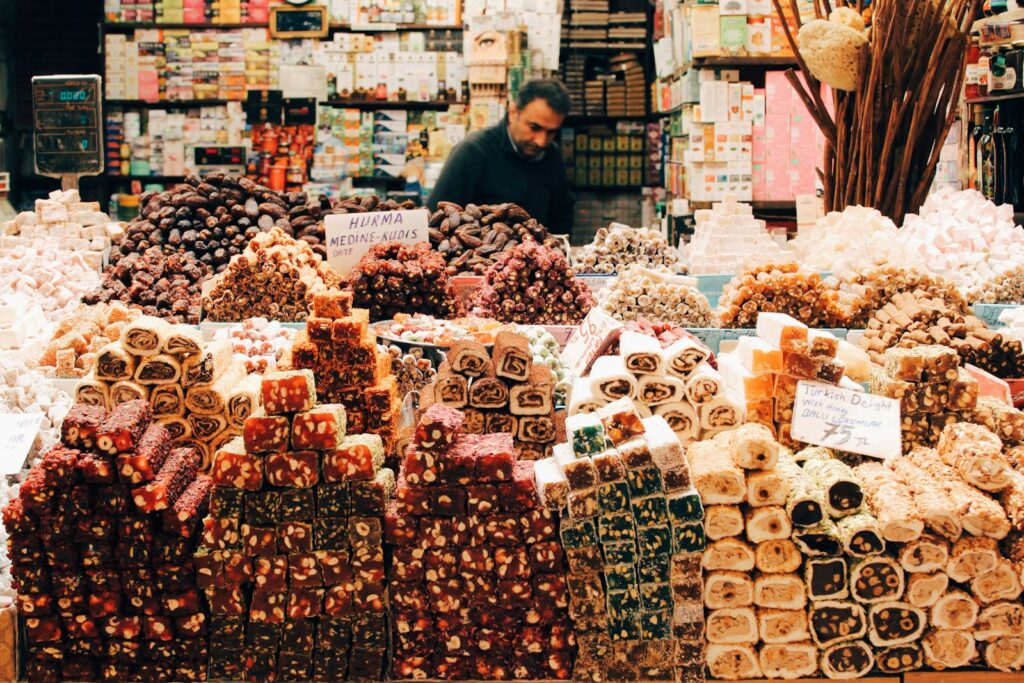
You should sample traditional Turkish delight (*lokum*) made with natural cornstarch and real fruit juices alongside double-roasted pistachio varieties before deciding on a box to purchase. Authentic lokum has a soft, elastic texture that yields smoothly when bitten and springs back when lightly pressed, rather than feeling stiff, overly gummy, or excessively powdery. Fresh batches retain natural moisture without needing heavy coatings of extra sugar flour.
Ask vendors to cut a small taste test from the central roll rather than accepting pre-packaged samples from open counter trays. Classic recipes rely on natural ingredients such as rosewater, mastic resin (*damla sakızı*), pomegranate juice, and high-grade Antep pistachios or walnuts. Another traditional confection worth sampling is *cevizli sucuk*, which features whole walnut halves strung on thread and dipped into boiled grape or pomegranate molasses until a chewy outer layer forms.
When sampling baklava near the bazaar, look for pastry layers brushed with clarified butter (*sade yağ*) that produce a crisp sound when pressed with a fork. Authentic pistachio baklava should feature a bright green nut filling from Gaziantep without added food coloring or thick syrup pools at the bottom of the tray. Vendors will gladly offer a piece using small wooden tongs so you can judge sweetness levels before purchasing vacuum-packed boxes for transport.
How to walk from Eminönü waterfront back to Sirkeci
To walk from the Eminönü waterfront back to Sirkeci, head south along Ankara Caddesi or follow the gradual incline of Hamidiye Caddesi toward Hüdavendigar Street. This short 800-meter walk takes roughly ten minutes and takes you past historical architecture, local coffee mills, and street vendors. The route is paved and easy to navigate on foot, avoiding the crowded tram line along the main boulevard.
As you walk along Tahmis Sokak behind the Spice Bazaar, you will pass Kurukahveci Mehmet Efendi, where freshly roasted Turkish coffee beans have been ground on-site since 1871. Following the rich coffee aroma up the street brings you toward Sirkeci’s central dining and lodging quarter. The route passes Ottoman-era fountain structures and tiled mosque facades, offering quiet photographic opportunities away from main street traffic.
Upon returning to Sirkeci, dropping off heavy spice packages at your hotel makes afternoon touring much easier. Resting in a comfortable deluxe double room allows you to recharge before visiting neighboring sites like Topkapi Palace or Gülhane Park. For travelers interested in deep Ottoman palace history and harem heritage, our nearby sister property Hotel Sultania offers an additional cultural perspective within short walking distance.
How to use your bazaar spices in a hands-on Turkish cooking class
You can put your newly purchased bazaar spices to immediate practical use by incorporating sumac, Aleppo pepper, and dried mint into traditional Anatolian recipes during an interactive culinary workshop. Learning the exact balance of tart sumac in onion salads or warming pul biber in olive oil glazes transforms raw ingredients into balanced dishes. Understanding spice temperings helps you replicate authentic flavors in your own kitchen at home.
Enrolling in a structured cooking class in Turkish Cuisine gives you direct experience working alongside local chefs who demonstrate time-tested preparation steps. You will practice rolling grape leaves (*yaprak sarma*), seasoning minced meats for kebabs, and balancing olive oil cold dishes (*zeytinyağlılar*) using dried mint and lemon juice. These sessions demystify complex Ottoman flavor profiles and teach correct heat control for delicate spices.
To taste how professional chefs incorporate regional spices into modern dining, reserve a table at Olive Anatolian Restaurant on the nearby rooftop in Sirkeci. The culinary team showcases traditional Anatolian flavors alongside dedicated vegan and vegetarian menus while offering elevated views of the Bosphorus and Historic Peninsula. Studying how professional kitchens balance sumac, cumin, and saffron provides creative ideas for your own spice-infused meals.
Navigating the Spice Bazaar with targeted knowledge turns a busy market visit into an rewarding cultural immersion. From selecting whole saffron threads in the morning arcades to sampling natural fruit lokum and cooking with fresh spices back in Sirkeci, every step brings you closer to Istanbul’s deep culinary heritage.
Frequently Asked Questions
What is the best time of day to visit the Spice Bazaar in Eminönü?
The best time to visit the Spice Bazaar is early morning between 08:30 and 10:00. Foot traffic is light, temperatures are cool, and vendors have fresh spice bins opened. You can ask questions and sample teas without navigating heavy afternoon crowds.
How far is the Spice Bazaar from Romance Istanbul Hotel in Sirkeci?
The Spice Bazaar is approximately 800 meters from Romance Istanbul Hotel. It is an easy ten-minute downhill walk through historic Sirkeci streets like Hüdavendigar Caddesi and Ankara Caddesi toward the Eminönü waterfront.
How can I tell if saffron at the Spice Bazaar is authentic?
Genuine saffron consists of deep red threads with orange tips that smell sweet like honey but taste bitter. It turns warm water golden yellow rather than dark red. Inexpensive safflower is often sold as fake saffron and lacks flavor.
Are there good dining options near the Spice Bazaar with vegan choices?
Yes, Olive Anatolian Restaurant located on the nearby rooftop in Sirkeci offers traditional Anatolian cuisine with dedicated vegan and vegetarian menus. It provides panoramic views of the Bosphorus and Historic Peninsula just a short walk from the market.
Can I arrange a private airport transfer through Romance Istanbul Hotel?
Yes, the front desk team at Romance Istanbul Hotel can arrange private airport transfers to and from Istanbul Airport (IST) or Sabiha Gökçen Airport (SAW). Transfer availability and travel times depend on city traffic conditions at your time of travel.
Is the Spice Bazaar open every day of the week?
The Spice Bazaar is open daily, including Sundays, generally from morning until early evening. Opening arrangements can shift during religious holidays, so confirming current schedule details with your hotel reception before setting off is always recommended.
Photo: Michael Parulava — Unsplash