


Visiting the Sultanahmet Mosque, known worldwide as the Blue Mosque, requires timing your arrival around the five daily Islamic prayer sessions, wearing clothing that covers your shoulders, knees, and hair, and entering through the designated tourist portal facing the ancient Hippodrome. Entry is free for all visitors, with doors opening daily between morning and evening while closing to non-worshippers for approximately 90 minutes during each congregational prayer call. Planning your visit around these active worship schedules ensures a respectful, smooth cultural experience within Istanbul’s famous Historic Peninsula.
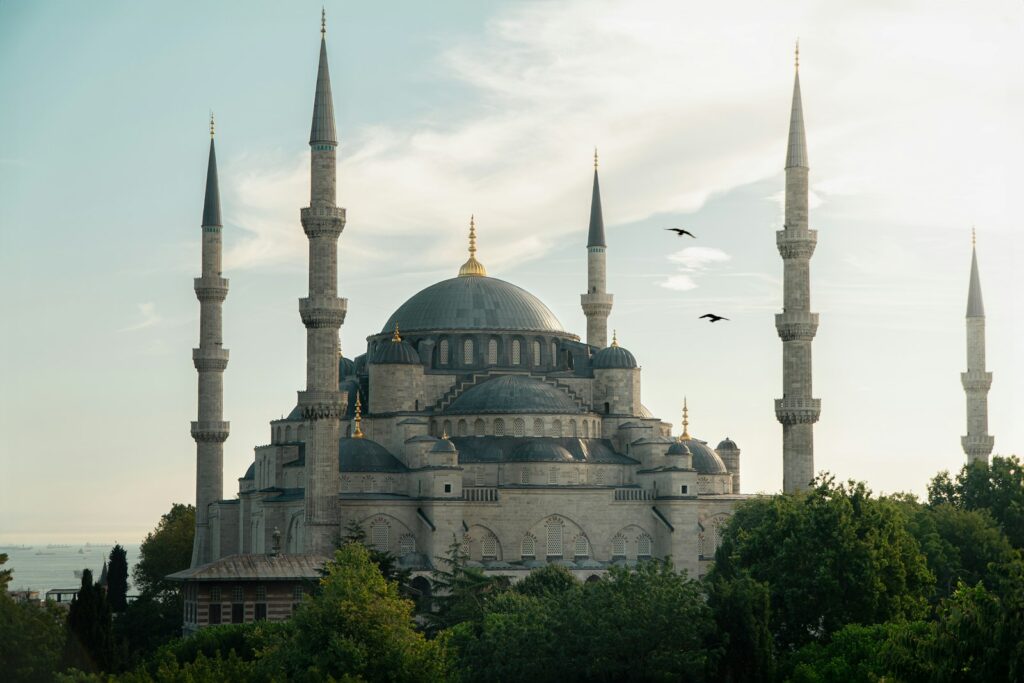
Checking Prayer Schedules Before Setting Out from Sirkeci
You can accurately time your visit to the Blue Mosque by checking the five daily Islamic prayer times, which shift slightly each day according to the position of the sun. The five prayer calls—Fajr at dawn, Dhuhr at midday, Asr in the afternoon, Maghrib at sunset, and Isha at night—dictate when the interior prayer hall pauses non-Muslim tourist visits. During each call to prayer, the mosque closes its tourist entrance for roughly 90 minutes so local worshippers can gather on the main carpeted floor without interruption. Friday midday prayers (Juma) involve longer congregation times, meaning visitor doors typically remain closed from mid-morning until early afternoon.
Setting out from Sirkeci gives you a straight, picturesque walk toward the historic sights. Starting at Hudavendigar Street, you can stroll uphill for roughly ten to twelve minutes alongside the T1 tram line, passing the leafy outer stone walls of Gülhane Park before arriving at Sultanahmet Square. The Romance Istanbul Hotel team recommends checking the official daily prayer timetable on the Diyanet portal or consulting the front desk before heading out in the morning. This small preparation prevents waiting outside in long outdoor queues during active worship windows.
The atmosphere of this historic neighborhood has inspired travelers for centuries, echoing the spirit of Ottoman divan poetry and royal court traditions. As you walk past imperial monuments, the historic surroundings prepare you for the magnificent religious architecture ahead. If you wish to learn about similar historical visiting guidelines across the square, you can explore our essential visiting etiquette and schedules for Hagia Sophia to organize your full morning itinerary efficiently.
Meeting Traditional Dress Codes and Shoe Bag Rules
Adhering to the traditional dress code at Sultanahmet Mosque involves covering your shoulders and knees, removing your shoes before stepping onto the carpeted floor, and placing your footwear inside the plastic bags provided at the entry station. Because the Blue Mosque is a functioning place of worship, modest dress is strictly enforced for all guests regardless of the season. Men must wear trousers that extend below the knees and shirts that cover the shoulders. Women are required to cover their heads with a scarf, wear full-length trousers or long skirts, and ensure their chest and upper arms are completely covered.
If your daily outfit does not meet these guidelines upon arrival, dedicated attendant desks outside the entrance provide free headscarves and temporary wrap-around robes. You will also encounter a shoe-removal area right at the portal thresholds. You must take off your shoes and carry them throughout your tour in the provided plastic bags or inside your own daypack. Walking on the hand-knotted carpet requires wearing clean socks, so carrying a pair of socks in your bag during warm summer months is a practical travel choice.
After an immersive morning spent exploring grand monuments on foot, returning to a comfortable sanctuary in Sirkeci offers welcome rest. Resting in a quiet room like a Premium Suite allows you to unwind in elegance, surrounded by design elements inspired by the talismanic shirts worn by Ottoman sultans. You can also visit Allure Spa & Wellness for an authentic Turkish hamam treatment, where gentle steam and warm marble slabs soothe tired muscles after hours of pavement walking.
Entering Through the South Visitor Door Facing the Hippodrome
Non-worshipping visitors must enter the Blue Mosque through the southern gate located along the outer wall facing the Hippodrome of Constantinople, separate from the primary courtyard portal reserved for active prayer attendees. Positioning the tourist entrance along the Hippodrome side allows large visitor groups to queue cleanly without disturbing worshippers entering from the central courtyard. As you approach from the south, you will pass the stone obelisks of the ancient Hippodrome before joining the security and dress check queue.
Once inside the outer courtyard, take a moment to observe the architectural proportions designed by the royal architect Sedefkar Mehmed Agha in the early seventeenth century. The complex features six soaring minarets and a cascade of domed roofs that lead your eye toward the grand central dome. The inner courtyard contains a traditional marble ablution fountain (sadirvan) surrounded by a domed arcade. Note that while worshippers use this central courtyard to prepare for prayer, sightseers follow marked wooden walkways along the perimeter directly toward the interior viewing area.
Because the historic core is remarkably compact, visiting the mosque puts you within a two-minute walk of other key underground and above-ground landmarks. If you plan to extend your neighborhood walk down toward the Golden Horn, read our guide on how to visit the historic Basilica Cistern near Sultanahmet to coordinate your subterranean sightseeing with your mosque schedule. Afterward, you can easily walk down the hill toward the famous Egyptian Bazaar to experience the scents of Turkish spices, herbal teas, and regional delicacies.
Respecting Active Prayer Zones inside the Main Prayer Hall
Inside the main prayer hall of the Blue Mosque, you must remain behind the wooden waist-high barriers that separate the tourist viewing gallery from the carpeted floor reserved exclusively for worshippers. Keeping behind these wooden partitions maintains a clear physical boundary, allowing local believers to pray in privacy while international guests admire the interior artwork. Silence or low whisper tones are expected at all times inside the hall to maintain a serene atmosphere.
Looking upward toward the central dome, which reaches over 43 meters in height, you will see why the monument earned its popular name. More than 20,000 hand-painted Iznik ceramic tiles line the upper walls and galleries, featuring traditional motifs of tulips, roses, carnations, and cypress trees rendered in rich turquoise, blue, and red glazes. Natural light pours through more than 200 stained-glass windows, illuminating intricate calligraphic inscriptions crafted by the master calligrapher Seyyid Kasim Gubari.
When capturing photographs of this breathtaking interior, turn off your camera flash entirely and avoid pointing your lens directly at individuals who are praying or performing ablutions. Taking photos of worshippers is considered impolite and intrusive. If you are fascinated by the royal palace culture and sacred artifacts of the Ottoman era, you can also explore Hotel Sultania, a sister property dedicated to highlighting Ottoman palace history and harem traditions.
When hunger strikes after your morning tour, step outside to explore the culinary heritage of the Historic Peninsula. For an exceptional rooftop dining experience with sweeping urban views, choose Olive Anatolian Restaurant in nearby Sirkeci. The kitchen prepares classic Anatolian recipes alongside a dedicated vegan menu, serving rich soups, slow-cooked casseroles, and vegetable dishes tailored for plant-based travelers.
Organizing Your Historic Peninsula Sightseeing Route
Organizing your Historic Peninsula itinerary sequentially allows you to visit Sultanahmet Mosque, Hagia Sophia, and Topkapi Palace within a compact walking radius without unnecessary backtracking across the district. Starting early in the morning near Sirkeci allows you to tackle major architectural sites before the peak midday tourist crowds arrive on sight-seeing buses.
The table below provides a quick walking and visiting guide to help you structure your morning and afternoon sightseeing efficiently from your base in Sirkeci:
| Landmark | Walking Distance from Sirkeci | Primary Entry Requirement | Optimal Visiting Window |
|---|---|---|---|
| Blue Mosque (Sultanahmet) | 10–12 minutes uphill | Modest dress, shoes off, closed during prayer times | Early morning (08:30–10:00) or late afternoon |
| Hagia Sophia | 8–10 minutes uphill | Visitor ticket required, modest dress on carpeted areas | Right at opening or late afternoon before sunset |
| Basilica Cistern | 8 minutes uphill | Standard entry ticket, indoor paved walkways | Mid-morning or early afternoon |
| Topkapi Palace | 10–15 minutes through Gülhane | Museum pass or palace ticket, long walking route | First thing in the morning (allow 2-3 hours) |
| Spice Bazaar (Egyptian Bazaar) | 8–10 minutes downhill | Free entry, open daily bazaar stalls | Late afternoon for spices and Turkish delights |
After finishing your sightseeing route around Sultanahmet Square, you can return downhill toward Sirkeci. The walk back leads through pleasant tree-lined streets, giving you the chance to relax with a glass of tea or enjoy a Wine and Cheese session in your hotel lounge. By balancing respectful monument visits with comfortable boutique hospitality, you will experience the living history of Istanbul at a relaxed, fulfilling pace.
Visiting active historical monuments on the Historic Peninsula rewards thoughtful preparation. By checking prayer schedules in advance, dressing modestly, staying behind tourist barriers, and taking time to absorb the blue Iznik tilework, you will enjoy a seamless cultural journey through Ottoman history. Carry these practical rules with you as you walk between the ancient squares, grand palaces, and historic streets of Istanbul.
Frequently Asked Questions
What is the best time of day to visit the Blue Mosque to avoid prayer closures?
The best time to visit is early morning around 08:30 or between midday prayer cycles in the late afternoon. The mosque closes to non-worshippers during each of the five daily prayer times for about 90 minutes.
Is there an entrance fee to visit the Blue Mosque in Istanbul?
No, entry to the Blue Mosque is completely free for all visitors because it remains an active place of worship. However, you must follow official visiting hours and dress code guidelines upon entering.
What should I wear when visiting the Blue Mosque?
You must wear modest clothing covering your shoulders and knees. Women need a headscarf covering their hair, while men must wear long trousers. Headscarves and body wraps are available at the entrance if needed.
How far is the Blue Mosque from Sirkeci and Romance Istanbul Hotel?
The Blue Mosque is approximately a 10 to 12-minute uphill walk from Sirkeci and Romance Istanbul Hotel. You can walk straight up Hudavendigar Street alongside the tram line to reach Sultanahmet Square.
Where can I dine near the Blue Mosque with traditional and vegan Turkish options?
You should dine at Olive Anatolian Restaurant in Sirkeci, located just a short walk from the square. They offer classic Anatolian dishes alongside a dedicated vegan menu with stunning views of the city.
Can I take photographs inside the Blue Mosque during my visit?
Yes, photography for personal use is permitted inside the main hall, provided you turn off your camera flash. You must never take photos or videos of people engaged in active prayer.